TL;DR: A well-planned event coffee service in Gauteng comes down to timing, placement, guest count, and choosing a provider who handles the logistics. Get those four things right and the coffee looks after itself on the day.
Planning an Event Coffee Service in Gauteng: Where Most Organisers Start Wrong
Most event organisers think about coffee last. The venue is booked, the catering is confirmed, the programme is drafted, and then someone mentions coffee and it gets added to the list as an afterthought.
That usually means a hired urn in the corner, instant coffee in sachets, and guests who quietly wish there was something better. Coffee is one of the most social elements of any event. When it’s good, people gather around it. When it’s not, people don’t bother.
This guide gives Gauteng event organisers a practical framework for planning a coffee service that works, from the initial decision through to what happens on the day.
Decide What Role Coffee Will Play at Your Event
Before anything else, get clear on what you want the coffee service to do. This shapes every other decision.
At a corporate conference, coffee during breaks keeps energy and focus up. It’s functional, but it should still be good. A strong flat white between sessions is a meaningful thing for a delegate who’s been in a room since 8am.
At a wedding or private celebration, coffee is more of a social anchor. The barista station becomes a gathering point, a conversation starter, a moment of warmth in a long day. Placement and timing matter more here because you’re creating a moment for guests, not just filling a beverage requirement.
At a year-end function or team event, coffee keeps people engaged across a full day and gives non-drinkers a genuinely premium option when the bar opens. That inclusivity matters more than most organisers realise until they’re standing in the room watching it play out.
Work Out Your Guest Count and Peak Demand Windows
Your guest count is the starting point, but the number that really matters is how many people will want coffee at the same time. That’s your peak demand window, and it’s what separates a coffee service that flows from one that backs up into a frustrating queue.
Common peak demand windows at Gauteng events include:
- Morning arrival: guests who haven’t had coffee yet and want one immediately
- Mid-morning break: the first formal break in a conference or corporate programme
- Post-lunch: the period after a meal when energy dips and everyone wants something warm and strong
- Late afternoon: particularly at full-day events, this window is often underestimated
- Cocktail hour at weddings: guests arrive from the ceremony, social energy is high, and a coffee bar in this window gets used heavily
Share this information with your coffee provider when you enquire. A good provider plans their service around your peak windows, not just your total duration.
Think Carefully About Placement
Where you put the coffee bar shapes how it gets used. A few placement principles that work consistently at Gauteng events:
- Near the main social area, not in a corner: If the coffee bar is tucked away, guests don’t find it naturally. Position it where people already gather.
- Accessible but not blocking flow: You want guests to drift toward it, not create a bottleneck in a key walkway or entrance.
- Visible from the main space: Seeing the barista at work and smelling fresh coffee draws people over. That sensory pull only works if guests can see and smell it from where they’re standing.
- Shaded for outdoor events: At garden parties and outdoor events in Gauteng, a shaded position is more comfortable for the barista and keeps the equipment stable during warmer months.
Plan Your Service Windows
Continuous service throughout an event isn’t always the right approach. At some events it makes sense, like a wedding where guests drift in and out across several hours. At others, defined service windows work better and help the barista manage demand without gaps or pressure.
A typical service window structure for a Gauteng corporate day event might look like this:
| Time | Service Window | Notes |
|---|---|---|
| 8:00 to 9:00 | Arrival coffee | High demand, guests arriving hungry for caffeine |
| 10:30 to 11:00 | Mid-morning break | Peak window, plan for this carefully |
| 13:00 to 14:00 | Post-lunch | Energy dip, strong drinks popular |
| 15:30 to 16:00 | Afternoon break | Lighter demand, iced options popular in summer |
Share a structure like this with your coffee provider and ask how they’d handle each window. Their answer tells you a lot about how prepared they are.
Think About the Full Menu, Not Just Espresso
Every event has guests who don’t drink coffee. Ignoring them produces a service that feels inclusive in theory but not in practice.
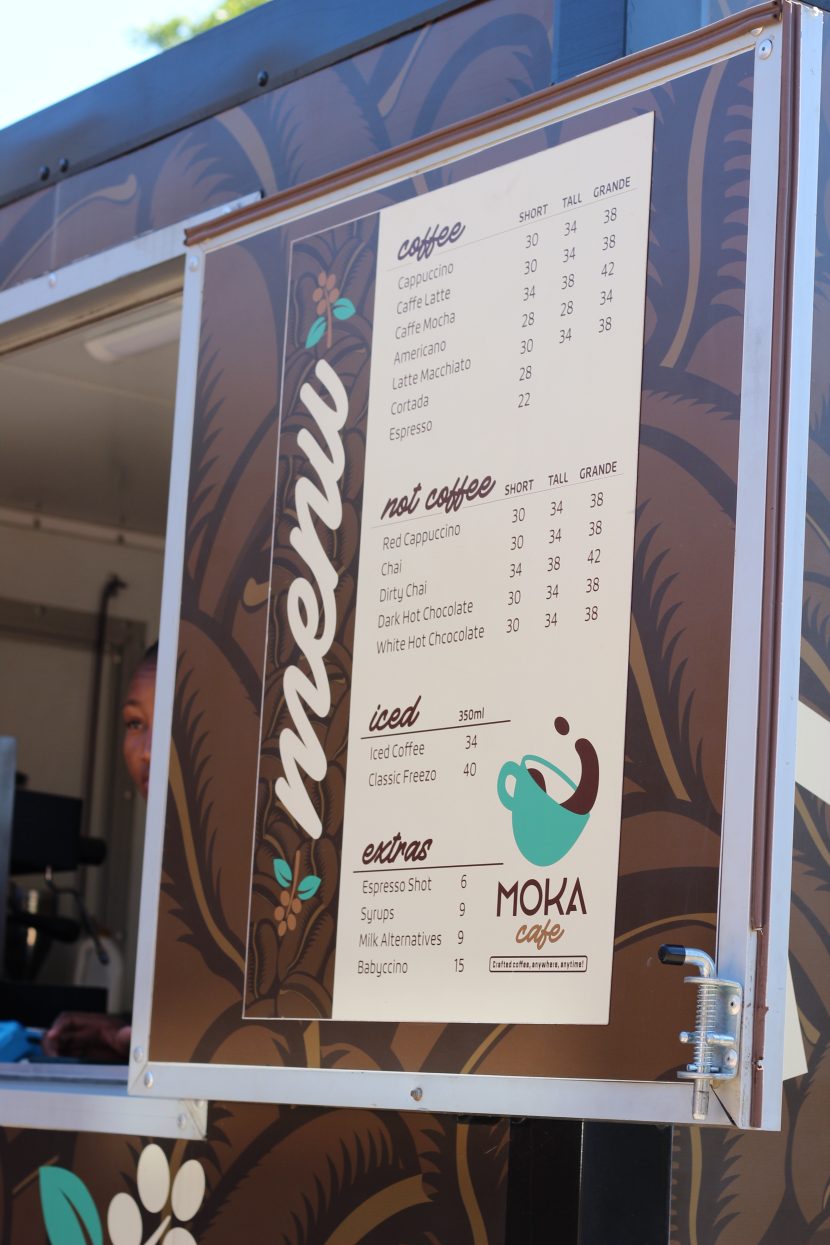
A well-rounded event coffee menu covers hot espresso drinks, non-coffee alternatives like rooibos-based red cappuccinos, chai and dirty chai, hot chocolates in dark and white, iced options for warmer events, and something for younger guests like a babyccino.
Moka Cafe’s menu covers all of this as standard. Every drink is made to order by a trained barista, which means a guest who orders a red cappuccino gets the same quality of attention and craft as the person ordering a flat white next to them.
Confirm Logistics Well Before the Day
The week before an event is the wrong time to be working out power requirements, access routes, and setup times. Confirm these details with your coffee provider at least two weeks out:
- Arrival and setup time: The coffee bar should be ready before the first guest arrives, not being assembled while people walk in.
- Power access: Confirm the location of the nearest power point and whether an extension lead is needed.
- Space: Let the provider know the dimensions of the area where the trailer will sit.
- Venue contact: Give your provider the venue coordinator’s details so they can communicate directly on access and logistics.
- Breakdown time: Know when the provider will pack down and make sure this fits within your venue’s access window.
On the Day: What to Expect
With a well-briefed provider, event day coffee service largely takes care of itself. Moka Cafe arrives ahead of the agreed service window, sets up the trailer, and is ready to serve before guests reach the station.
The barista manages the queue, takes orders, and produces consistent drinks from the first cup to the last. You don’t need to check in, manage the service, or troubleshoot anything. A professional mobile coffee bar removes a whole category of event-day stress.
Frequently Asked Questions
How much coffee should I plan for per guest?
At a full-day corporate event, most guests will have two to three drinks across the day. At a three-hour wedding cocktail reception, one to two drinks per guest is a reasonable estimate. Share your event duration and structure with your provider and plan service capacity from there.
Should the coffee bar run all day or during set windows?
This depends on your event format. Continuous service works well for weddings and social celebrations. Defined windows are often more practical for conferences and structured corporate events. Build the service around your programme.
What if my venue doesn’t have easy power access?
Raise this at the enquiry stage. Most professional mobile coffee bar providers have handled this situation before and can advise on solutions. Moka Cafe confirms all power and access requirements as part of the booking process.
How early should I book for a Gauteng event?
Four to six weeks ahead for most events. For peak-season events from October through December in Gauteng, book as early as you can. Year-end function dates especially fill well in advance.
A well-planned coffee service makes your event feel more considered without adding to your workload. Talk to Moka Cafe about your Gauteng event.