TL;DR: Urn coffee and barista coffee are both called coffee. What guests experience from each one is completely different, in taste, in the feeling of being looked after, and in what they say about your event afterwards. This guide explains exactly what that difference looks like from a guest’s perspective.
Why This Comparison Matters for Gauteng Event Planners
Most corporate events and private functions in Gauteng default to urn coffee. It’s familiar, it’s simple to arrange, and it feels like a reasonable solution to the question of how to give guests something warm to drink.
A growing number of event organisers are choosing barista-made coffee instead. Before you make a decision either way, it’s worth understanding what the difference actually looks like from the perspective of a guest walking up to get a cup.
This article answers that question directly, covering taste, experience, and the impression each option leaves on the people at your event.
What Guests Experience With Urn Coffee
A guest at a Gauteng event who approaches an urn typically finds a large metal container of filter coffee that was brewed some time before they arrived. Sometimes 30 minutes ago, sometimes longer. Beside it: a stack of cups, a carton of milk, a jar of sugar, and possibly some instant coffee sachets for people who want something stronger.
The experience is functional. Guests pour their own cup, add what they want, and move on. There’s nothing wrong with it at a basic level. It’s coffee, it’s warm, it does the job.
But a few things are quietly not right:
- The flavour degrades over time. Filter coffee sitting in an urn for 30 minutes tastes noticeably flatter than freshly brewed coffee. After an hour, the difference is significant. Guests don’t necessarily articulate this, but they notice it the way coffee drinkers always do: they drink less of it, or they don’t go back for a second cup.
- The experience is entirely self-managed. There’s no one there. No interaction. Guests pick up a cup, pour, and walk away. It’s the hospitality equivalent of a vending machine, adequate, but without any warmth.
- The menu is limited. Black or white. Guests who want anything more specific, a flat white, a cappuccino, something without caffeine, something cold, have no option.
- Someone has to manage it. The urn needs to be monitored, the milk needs to be restocked, the cups need to be refilled. At a busy event, this falls on whoever is nearby, often a staff member with other responsibilities, or the host themselves.
What Guests Experience With a Barista at a Gauteng Event
A guest approaching a mobile coffee bar at a Gauteng event has a different experience from the moment they arrive at the station.
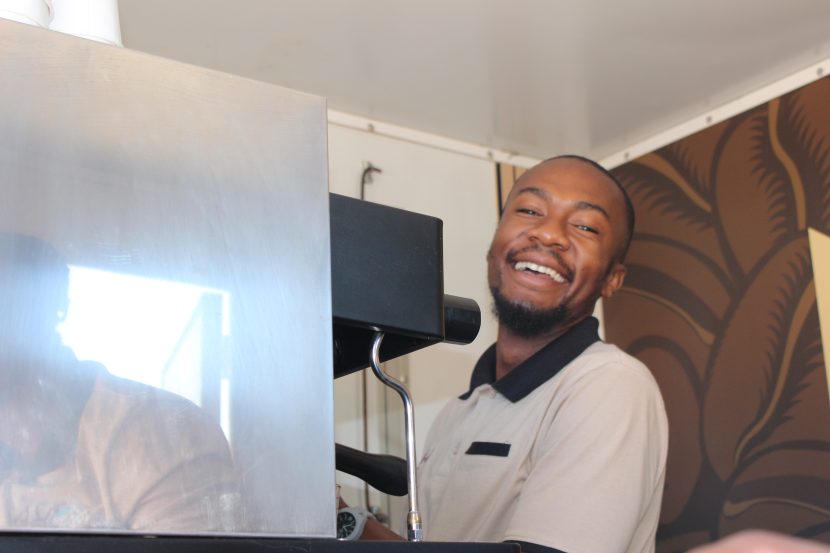
The barista makes eye contact and asks what they’d like. There’s a menu: a real one, with options across hot espresso drinks, non-coffee alternatives, and cold options. The guest makes a choice, watches their drink being made, and receives it fresh and hot.
A few things are happening here that don’t happen at the urn:
- The coffee is genuinely good. Fresh espresso pulled from calibrated equipment by someone who knows what they’re doing tastes different from filter coffee that’s been sitting. Guests who drink specialty coffee regularly notice this immediately. Guests who don’t drink it regularly notice that the coffee was better than they expected.
- Someone is paying attention to them. The brief interaction with a barista, taking an order, making a recommendation, handing over a drink made specifically for them, is a small act of hospitality that guests feel even if they don’t name it. They were looked after. That impression stays.
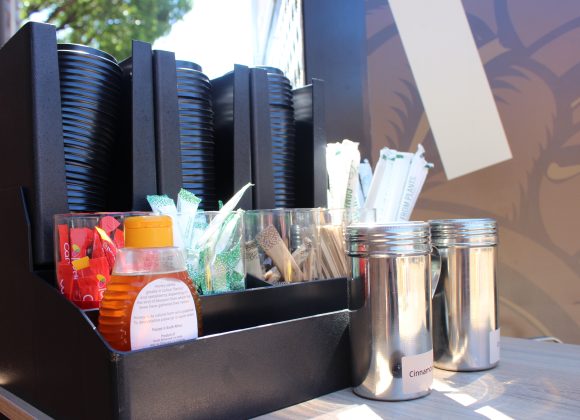
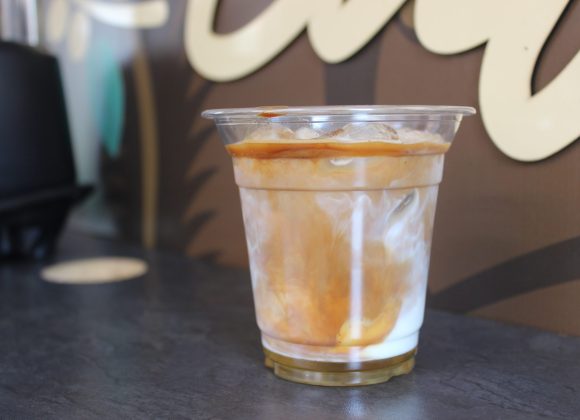
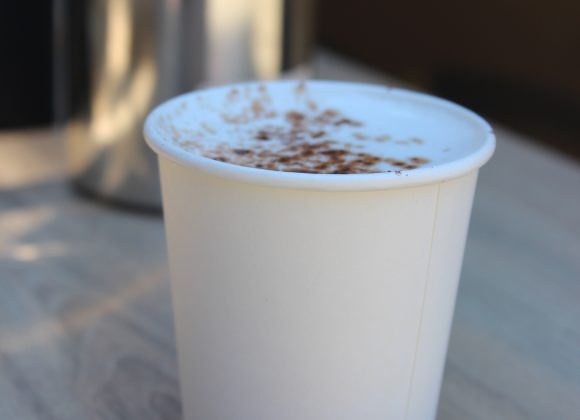
- There’s something for everyone. Moka Cafe’s menu covers flat whites, cappuccinos, lattes, Americanos, red cappuccinos, chai, dirty chai, hot chocolates, iced coffee, Freezos, and babyccinos. A guest who doesn’t drink coffee gets a proper drink. A guest who wants something cold on a warm afternoon gets something proper. Nobody walks away because there was nothing for them.
- It becomes a moment in the event. The coffee bar becomes a place people gravitate toward. It creates a natural gathering point and a conversation starter. That doesn’t happen around an urn.
The Impression Each Option Leaves
Ask yourself what guests say about each experience when they’re talking about your event afterwards.
With urn coffee, they don’t say anything. It was there. It was fine. It’s not mentioned.
With a quality barista service, guests comment. “The coffee was really good.” “Did you try the red cappuccino?” “I went back three times.” These comments attach to the event. They become part of how guests describe the occasion to people who weren’t there, and by extension, part of how your event, your company, or your hospitality is remembered.
When Urn Coffee Is the Right Call
An honest comparison acknowledges that urn coffee is appropriate in some contexts. A very informal internal meeting. An event where the budget genuinely doesn’t accommodate a professional service. A situation where coffee is purely incidental and guest experience around it isn’t a priority.
Outside of those situations, the barista service consistently produces a better outcome for guests and a better impression for the event as a whole.
Frequently Asked Questions
How noticeable is the difference in coffee quality between an urn and a barista?
Very noticeable to regular coffee drinkers, and noticeable to most guests in a more general way. The coffee is either good enough to go back for a second cup or it isn’t. Filter coffee from an urn that’s been sitting for 30 minutes rarely is.
Is barista coffee significantly more expensive than hiring an urn?
The upfront cost is higher, but the comparison isn’t only financial. Urn coffee requires ongoing event-day management. Barista coffee is self-managing from the event organiser’s perspective. The total cost, including time and attention, is closer than the initial price difference suggests.
What if some guests at my Gauteng event prefer simple black coffee?
An Americano, espresso diluted with hot water, is the barista equivalent of a straightforward black coffee, and it’s on the Moka Cafe menu. Guests who prefer simple coffee still get a quality version of exactly what they want.
Can a barista service work at the same type of event I’d usually use an urn for?
Yes. Moka Cafe serves corporate conferences, team events, private functions, and celebrations of all kinds across Gauteng. The service scales to your event size and structure.
Ready to upgrade the coffee at your next Gauteng event? Get in touch with Moka Cafe to discuss what a barista service looks like for your event.