• Home
  • About Us
  • Articles
  • Contact Us
Mobile Coffee Trailer
Corporate Events Mobile Coffee Trailer

Your Corporate Event Has 200 Guests and One Coffee Break: Here Is How to Handle It

mokacafe
No Comments
June 19, 2026
5 Mins read
21 Views
IMG_2069

TL;DR: A single coffee break for a large corporate event in Gauteng is one of the most underestimated logistical challenges in event planning. The solution is choosing the right provider, sharing your peak demand details upfront, and planning the placement of the coffee bar so the queue flows naturally rather than stalling.

The Real Problem With Coffee at Large Corporate Events in Gauteng

You have 200 delegates. The morning session wraps at 10:30. You have a 30-minute break before the keynote. Every single person in that room wants coffee.

If you haven’t planned this carefully, what follows is a queue that barely moves, delegates who give up and drift back to their seats uncaffeinated, and a break that was supposed to create energy and connection doing neither of those things.

This is one of the most common and most preventable problems at large corporate events in Gauteng. The fix isn’t complicated, but it does require thinking about the coffee service with the same attention you give the programme and the venue.

Why Corporate Event Coffee Service in Gauteng Often Fails at Scale

Most coffee service failures at large events come down to one of these causes:

  • Underestimating peak demand: The total number of guests is considered, but the number of people who will want coffee in the same 15-minute window is not. Those are very different numbers.
  • Single-point service: One coffee station for 200 people creates a bottleneck. The queue backs up. People at the back of the room don’t bother.
  • Slow production: A provider without the equipment or the barista skill to work at pace during a peak window will struggle. A well-made flat white takes around 60 to 90 seconds. Do that calculation across 150 orders in 30 minutes and you’ll see the problem quickly.
  • No communication with the provider: The provider arrived expecting a general event service and wasn’t briefed on the 10:30 break structure. They weren’t ready for the rush.

Every one of these is avoidable with a bit of planning and a provider who asks the right questions.

How to Plan a Coffee Break That Actually Works

Brief Your Provider on the Peak Window Specifically

When you enquire about a mobile coffee bar for a Gauteng corporate event, don’t just share the total guest count and event duration. Share the structure of the day. Tell your provider: we have 200 delegates, the first break is at 10:30 for 30 minutes, and that’s when demand will be highest.

A good provider responds to this with a specific plan. They’ll tell you how they’ll handle that window, how long the average order takes during a busy period, and whether anything about your event structure changes how they’d set up.

Think About Queue Flow, Not Just Position

Where you put the coffee bar matters, but how the queue flows around it matters just as much. A station positioned in the middle of a narrow corridor creates a bottleneck that slows everything down. A station in a more open area, with natural queuing space on one or both sides, moves people through faster even if the production speed is the same.

For events with multiple break periods, positioning the coffee bar near the main breakout area means guests reach it naturally rather than navigating to find it.

Consider the Full Menu for a Corporate Audience

At a 200-person corporate event, your guest list includes people with a wide range of preferences. Some will want a strong flat white. Some will want an Americano. Some will have dietary preferences that mean they want a milk alternative. Some won’t drink coffee at all.

A broad menu keeps the queue moving because guests find what they want quickly rather than asking questions at the front. It also means nobody in a corporate setting feels like their preference wasn’t considered, which matters for the tone of hospitality you’re setting.

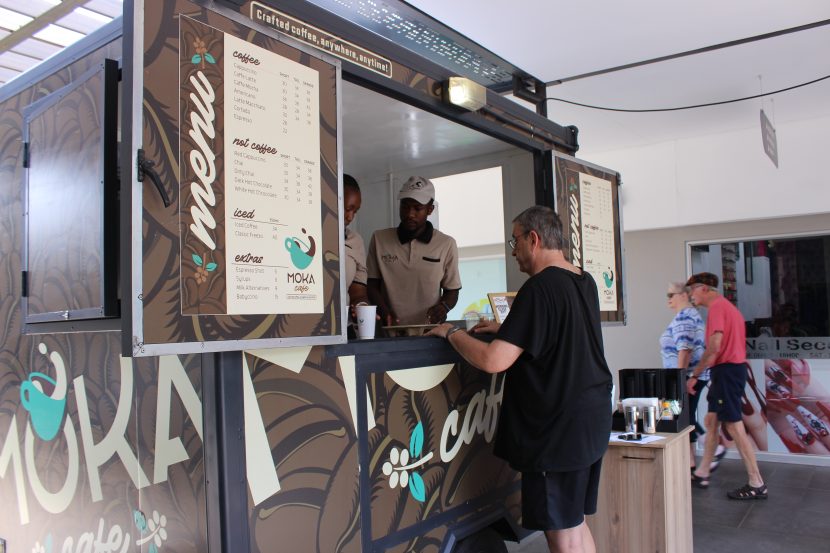
Moka Cafe’s menu covers espresso-based drinks across all the standard formats, non-coffee alternatives including the red cappuccino and chai options, and iced drinks for warmer event environments.

Plan the Break Duration Around the Queue

If your break is 20 minutes and you have 200 guests, not everyone is going to get coffee, especially if there’s only one service point. Either extend the break, add a second service point, or accept that only a portion of delegates will get coffee during that window.

There’s no wrong answer here, but it’s worth making this decision consciously rather than discovering it on the day when the queue is still 40 people deep and the next session is about to start.

What a Well-Managed Large Event Coffee Service Looks Like

When the planning is right, a large corporate event coffee service runs quietly and efficiently. Delegates move through the queue at a reasonable pace. The barista works confidently without the production quality dropping under pressure. The break achieves what it’s supposed to: a genuine pause, a social moment, and enough caffeine to get people through the next session.

The coffee is good enough that people comment on it, which reflects on the event as a whole. That outcome is entirely achievable at a 200-person corporate event in Gauteng. It just requires a provider who has done it before and a brief that gives them what they need to plan properly.

A Planning Checklist for Large Corporate Event Coffee Service

  • Share total guest count and peak demand windows with your provider at the enquiry stage
  • Ask your provider how they plan to handle your specific peak window
  • Consider placement for queue flow, not just for visibility
  • Choose a provider with a full menu that covers all guest preferences
  • Confirm arrival time, setup duration, and power requirements at least a week before the event
  • Build break duration around realistic service capacity
  • Give your provider the venue coordinator’s contact details for direct communication

Frequently Asked Questions

How many guests can a single barista serve in a 30-minute break?

An experienced barista working at full pace can produce roughly 60 to 80 drinks in a 30-minute window, depending on drink complexity and queue flow. For 200 guests expecting coffee in a single break, discuss service capacity with your provider before booking.

Should I have more than one coffee station for a large event?

For very large events with tight break windows, multiple service points can help. Discuss your event structure with your provider and ask what they recommend based on your specific guest count and programme.

How do I brief a coffee bar provider for a large corporate event?

Share your total guest count, the full programme structure including break times and durations, the venue layout, and any specific preferences or dietary requirements you’re aware of. The more context your provider has, the better they can plan the service.

What’s the biggest mistake corporate event planners make with coffee service?

Treating it as an afterthought. Coffee at a corporate event is a genuine moment of hospitality that affects the energy and tone of the whole day. Planning it with the same attention as the catering and the AV pays off in how delegates experience the event.

Planning a large corporate event in Gauteng? Talk to Moka Cafe about service capacity and availability for your event date.
Shares
Write Comment
Leave a Reply Cancel reply

Your email address will not be published. Required fields are marked *

Previous Post

The Complete Guide to Hiring a Mobile Coffee Bar in Gauteng

Next Post

Why Your Gauteng Event Guests Are Leaving Early (and How Better Coffee Fixes It)

About Us

Moka Café

Mobile Coffee Trailer in Gauteng

Moka Cafe is a Gauteng-based mobile coffee bar bringing freshly crafted, high-quality coffee to events of all kinds. With a passion for great flavour and friendly service, we turn any gathering into a warm, memorable coffee experience

Social Icons
EmailFacebookInstagramLinkedInPinterestTikTok
Featured Posts
Mobile Coffee Trailer

Mobile Coffee Bar vs Coffee Station at Gauteng Events: What Is the Actual Difference?

July 23, 2026
Mobile Coffee Trailer

How to Make Non-Coffee Drinkers Feel Welcome at Your Gauteng Event

July 23, 2026
Mobile Coffee Trailer

How to Add a Coffee Bar to Your Gauteng Product Launch (And Why It Works)

July 23, 2026
Contact Us

    You might also like
    IMG_2004
    Mobile Coffee Trailer

    Mobile Coffee Bar vs Coffee Station at Gauteng Events: What Is the Actual Difference?

    4 Mins read
    July 23, 2026

    A coffee station and a mobile coffee bar are not the same thing, even though both turn up at events and produce hot drinks. The difference is in quality, experience, and what guests walk away with. This article explains what each one actually delivers so you can make an informed choice for your Gauteng event. Why the Distinction Matters for Your Gauteng Event When event planners in Gauteng search for coffee options, the terms “coffee station” and “mobile coffee bar” tend to get used interchangeably. They’re not interchangeable. The gap between what each option delivers for your guests is significant, and choosing one when you expected the other is a frustration that shows up on the day when there’s nothing you can do about it. This article gives you a clear picture of what each option is, what it produces, and which one suits which type of event. What a Coffee Station Is A coffee station at a Gauteng event is typically a self-serve setup: a table or unit equipped with a coffee machine, pre-portioned coffee, milk, sugar, and cups. Guests serve themselves. There may or may not be someone supervising the station. The machine at a coffee station ranges widely in quality. At the lower end, it’s a drip machine or a pod unit. At the higher end, it might be a prosumer espresso machine that a staff member operates. But in most cases, the defining characteristic of a coffee station is that it produces a standardised output with limited customisation and limited interaction. Coffee stations work for specific contexts: a casual office meeting, a budget-constrained event where beverage service is secondary, or a very small gathering where the host is happy to manage the machine themselves. What they don’t produce is a guest experience. They produce a drink. What a Mobile Coffee Bar Is A mobile coffee bar is a fully equipped, self-contained specialty coffee service that comes to your event. Moka Cafe’s mobile coffee bar is built around a commercial-grade espresso machine, a dedicated grinder, and a trained barista who operates it. Every drink is made to order. The barista pulls a fresh shot for every cup, steams milk to the right temperature for each drink type, and produces a consistent result across the full service window. The guest interacts with a person, makes a choice from a real menu, and receives a drink that was made specifically for them. The difference in quality between a well-made espresso drink and the output of a pod machine or a pre-brewed station is immediately noticeable to any regular coffee drinker. And the difference in the guest experience, the warmth of interaction, the sense of being served rather than serviced, is noticeable to everyone. A Side-by-Side Comparison Coffee Station Mobile Coffee Bar Equipment Pod machine, drip machine, or basic espresso unit Commercial espresso machine and grinder Coffee quality Standardised, often average Freshly ground and pulled to order Menu range Black, white, sometimes instant hot chocolate Full menu across hot, cold, and non-coffee options Barista Usually no dedicated barista Trained barista for the full service window Guest experience Self-serve, functional Made to order, personal, warm Event-day management Requires monitoring and restocking Self-managing from the host’s perspective Cost Lower Higher When Each Option Is the Right Call A Coffee Station Makes Sense When You’re running a small internal meeting or workshop where coffee is a practical requirement rather than a hospitality moment. The guest count is low, the event is short, and nobody in attendance has an expectation around beverage quality. You have someone available to manage the station and it won’t become their primary job for the day. A Mobile Coffee Bar Makes Sense When The event is one where guests will notice and remember the details. Corporate functions where first impressions carry professional weight. Weddings and private celebrations where the experience is the point. Year-end functions where the coffee service signals that the people who planned the event thought about the people attending it. Exhibitions and product launches where the coffee bar is an active part of the brand experience rather than a background utility. The Question Worth Asking Before you decide which option fits your Gauteng event, ask yourself what you want guests to say about the coffee when they leave. If the answer is “nothing, because coffee wasn’t really part of the experience,” a coffee station may be adequate. If the answer is “I want them to say it was good,” a mobile coffee bar is what produces that outcome. Frequently Asked Questions Can a mobile coffee bar work at a small event? Yes. Moka Cafe serves events of varying sizes across Gauteng. For smaller events, the service is structured to match the scale and guest count appropriately. Is the quality difference between a coffee station and a mobile coffee bar really noticeable? To regular coffee drinkers, yes, immediately. To guests who drink coffee less frequently, the difference shows up in whether the drink is good enough to go back for a second. Fresh espresso pulled by a skilled barista consistently performs better on that measure than pre-portioned or pod-based alternatives. Can I get a mobile coffee bar if my event doesn’t have a lot of outdoor space? Yes. Moka Cafe operates at indoor venues as well as outdoor events. Setup requirements, including space and power access, are confirmed at the booking stage and the service is planned around your specific venue constraints. What’s included in the Moka Cafe mobile coffee bar service? The full setup including the trailer, equipment, barista, ingredients, and breakdown at the end. Everything needed for the service comes with the booking. Visit the website for the full menu and service details. Ready to go beyond a coffee station for your next Gauteng event? Talk to Moka Cafe about what a mobile coffee bar looks like for your occasion.

    IMG_1844-scaled.jpg
    Mobile Coffee Trailer

    How to Make Non-Coffee Drinkers Feel Welcome at Your Gauteng Event

    5 Mins read
    July 23, 2026

    Non-coffee drinkers at Gauteng events are often an afterthought in the beverage planning. A quality mobile coffee bar menu with genuine non-coffee options, from red cappuccinos to dirty chai to hot chocolate, means every guest gets something worth having rather than a glass of water and a polite smile. The Guest Nobody Plans For Spend any time in Gauteng event planning and you’ll notice a recurring gap. The coffee service is arranged, the bar is stocked, the catering is confirmed, and somewhere in that process the non-coffee drinkers get forgotten. Or rather, they get assumed: there’s water, there are soft drinks, they’ll be fine. They’ll be fine. But fine is a long way from the warm, considered hospitality that the rest of your guest list is receiving. And at a corporate function, a wedding, or a celebration where every detail is meant to signal that your guests matter, “fine” is a small but real miss. This article is about fixing that miss without adding complexity to your planning. Who the Non-Coffee Drinkers Actually Are Before assuming this is a small or niche concern, it’s worth thinking about who falls into this category at a typical Gauteng event: Guests who are pregnant and avoiding caffeine Guests who are sensitive to caffeine and find it affects their sleep or anxiety Guests who simply don’t enjoy the flavour of coffee Guests who don’t drink coffee for personal, cultural, or religious reasons Younger guests attending family events who aren’t old enough for espresso Guests who love the idea of a warm, comforting drink at an event but associate coffee with a specific taste they don’t enjoy At most Gauteng events, this group represents a meaningful proportion of the room. Treating them as an edge case rather than a planned-for audience is a hospitality choice with a visible effect on who feels welcomed and who feels like an afterthought. What a Good Non-Coffee Menu Looks Like The solution isn’t complicated, but it requires a coffee provider with a menu that goes beyond espresso. Moka Cafe’s event menu includes several options that non-coffee drinkers actively enjoy rather than reluctantly settle for: Red Cappuccino Made with rooibos espresso rather than coffee, the red cappuccino has the same visual appearance and tactile warmth of a traditional cappuccino but is completely caffeine-free. It’s distinctly South African, which gives it a conversational quality at events that more generic alternatives don’t have. Guests who order it often become advocates for it within the room, recommending it to other non-coffee drinkers who weren’t sure what to ask for. Chai and Dirty Chai Chai is a spiced tea drink made with milk, cinnamon, ginger, and warming spice notes. It’s comforting, aromatic, and feels like a considered choice rather than a default. The dirty chai adds a shot of espresso for guests who want the spice and warmth with a caffeine boost, making it a crossover option that appeals to both camps. Hot Chocolate Dark and white hot chocolate are on the Moka Cafe menu. Rich, properly made hot chocolate is a premium drink in its own right, not a children’s fallback. At corporate events and evening functions, it performs particularly well with guests who want something indulgent without caffeine. Iced Coffee and Freezo For warm outdoor events and summer functions in Gauteng, iced options fill a different gap. Not all iced drinks are coffee-based, and having cold options available means guests in a warm environment have something refreshing regardless of their coffee preferences. Babyccino Warm, frothy, caffeine-free milk in a small cup. At family-friendly events, weddings with younger guests, and celebrations where children are in attendance, the babyccino is one of those details that parents notice immediately. It’s inclusive in a very specific and visible way. How to Communicate the Full Menu to Your Guests A common situation at events is that non-coffee drinkers approach the coffee bar, assume there’s nothing for them, and walk away without asking. A clearly displayed menu board that leads with or prominently includes the non-coffee options prevents this. It signals before the guest reaches the counter that they were thought of. If you’re managing a large Gauteng event with a structured programme, it’s worth briefing your barista to proactively mention the non-coffee options during quieter moments. A barista who asks “are you a coffee drinker or would you prefer something without?” removes the awkwardness of a guest not knowing what to ask for. Why This Matters Beyond Hospitality There’s a practical reason to think about this beyond simply being thoughtful. Non-coffee drinkers who find something they genuinely enjoy at your coffee bar stay at the coffee bar longer. They come back. They bring their non-coffee-drinking friends. That behaviour creates the social gathering effect that a well-run coffee service produces, and it’s entirely dependent on there being something worth ordering in the first place. An event where the coffee bar only serves espresso drinkers well is an event that loses half its potential social energy around that station. Frequently Asked Questions Are non-coffee options available at every Moka Cafe event? Yes. The red cappuccino, chai, dirty chai, hot chocolates, and babyccino are part of the standard menu. Iced options are also available. No additional arrangement is needed to include them. How popular are non-coffee options at corporate events? More popular than most organisers expect. Corporate audiences include a significant proportion of non-coffee drinkers, and a quality chai or red cappuccino at a conference break is something guests comment on because they weren’t expecting to find it. Can I feature a specific non-coffee drink prominently at my event? Yes. If you want the red cappuccino or a specific drink to be a feature of your event’s coffee service, mention this in your brief. The barista can recommend it actively and it can be highlighted on the menu board if one is being used. What’s the most popular non-coffee option at Gauteng events? The red cappuccino is consistently the most remarked-upon non-coffee option. Its rooibos base, South African identity, …

    IMG_2012
    Mobile Coffee Trailer

    How to Add a Coffee Bar to Your Gauteng Product Launch (And Why It Works)

    5 Mins read
    July 23, 2026

    A product launch in Gauteng lives or dies on the impression it leaves. A quality mobile coffee bar gives guests a reason to arrive early, a reason to linger after the presentation, and a sensory experience that anchors your brand in their memory. This article explains how to use one effectively. Why a Coffee Bar Makes Sense at a Gauteng Product Launch A product launch is one of the most intentional events a business runs. Every element is chosen to communicate something about the brand: the venue, the lighting, the music, the catering. The goal is a room full of journalists, clients, partners, or distributors who leave with a specific impression firmly attached to what they just experienced. Most product launches get the big things right and let the small things drift. The coffee is an afterthought: a hotel urn at the back of the room or a self-serve station that nobody particularly notices. The opportunity that represents is significant. A quality mobile coffee bar at a Gauteng product launch does several things simultaneously. It gives guests something excellent to consume from the moment they arrive. It creates a natural gathering point that keeps people in the room and talking rather than arriving, observing, and leaving. And it signals, without a word of copy, that your brand pays attention to quality at every level of the experience it delivers. How to Position the Coffee Bar Within the Launch Programme Pre-Launch Arrival The period before the formal presentation starts is valuable and often wasted. Guests arrive at a venue, collect a name badge, and stand around with nothing obvious to do. A coffee bar active during this window gives them somewhere to go, something good to hold, and a context for introductions. The room warms up faster and the energy at the start of your presentation is noticeably higher when guests have already been connecting for 20 minutes over a well-made flat white. During Product Interaction If your launch involves a demo zone or a product interaction area, positioning the coffee bar nearby creates dwell time in that space. Guests who might otherwise move through quickly stay because they’re comfortable, caffeinated, and in conversation. That extended interaction with your product is valuable in a way that’s hard to replicate with a programme element alone. Post-Presentation The period after the formal presentation is where many launches lose momentum. The reveal is done, the key messages have landed, and the crowd starts thinking about the car park. A coffee bar that kicks into full service at this point creates a reason to stay. It extends the informal conversation window that’s often where the most valuable media relationships, client interactions, and partnership conversations actually happen. What Moka Cafe Brings to a Product Launch in Gauteng A fully equipped mobile coffee trailer, a trained barista, and a menu that covers every guest preference. For a product launch specifically, there are a few elements worth highlighting: Visual quality: Moka Cafe’s setup is clean, professional, and visually aligned with the kind of premium aesthetic that a product launch in Gauteng typically requires. The trailer doesn’t clash with the venue; it contributes to it. Barista warmth: At an event where your guests are media, clients, or industry stakeholders, the barista’s ability to engage warmly without being intrusive matters. Moka Cafe’s baristas are experienced in professional event environments. Full menu range: Journalists and media contacts often have specific coffee preferences. Clients attending a launch may not drink coffee at all. A full menu from flat whites and Americanos through to chai, red cappuccino, and iced options means nobody is left without something genuinely good. Making the Coffee Bar Part of the Brand Story One consideration worth exploring for product launches specifically: the coffee bar can become an active part of the brand narrative rather than a background service. A drinks menu developed around the product being launched, a signature drink named after the product, or branded cups and packaging that carry the launch identity extend the brand story into the beverage experience. These details are noticed by the kind of guests who attend product launches and covered by the kind of media who write about them. Discuss these options with Moka Cafe at the planning stage. The more specific your launch concept, the more the coffee service can be tailored to it. Practical Considerations for a Product Launch Setup Venue type: Product launches happen in warehouses, showrooms, rooftops, event venues, and hotel ballrooms. Each has different power, space, and access configurations. Share your venue details with Moka Cafe early so the setup is planned around the actual space. Guest profile: The audience at a product launch shapes what the menu needs to prioritise. A tech launch for a young professional audience skews differently from a luxury product launch for a corporate client base. Timing: Confirm exactly when you want the coffee bar active. Pre-launch only, post-presentation only, or throughout. This shapes how the service is structured and staffed. Photography and media: If your launch is being photographed or filmed, consider where the coffee bar sits in relation to the camera angles. A well-presented barista station often appears in product launch coverage because it’s a visually compelling element of the room. Frequently Asked Questions Can Moka Cafe operate at a product launch in a non-traditional venue? Yes. Moka Cafe has experience across a range of venue types in Gauteng, from traditional event spaces to unconventional launch environments. Share your venue details and the team will advise on the most practical setup configuration. How early should I book a coffee bar for a product launch? For a product launch, ideally six or more weeks in advance. Launch dates are often fixed by campaign timelines and supplier availability, and booking early ensures your preferred date is secured. Can the coffee bar be branded with our product or company identity? Ask Moka Cafe about branding options when you enquire. This is worth discussing early so it can be incorporated into the setup …

    Copyright: Moka Cafe 2026
    Mobile Coffee Trailer
    • Terms of Service
    • Privacy Policy
    Mobile Coffee Trailer
    • Home
    • About Us
    • Articles
    • Contact Us
    About Us

    Moka Café

    Mobile Coffee Trailer in Gauteng

    Moka Cafe is a Gauteng-based mobile coffee bar bringing freshly crafted, high-quality coffee to events of all kinds. With a passion for great flavour and friendly service, we turn any gathering into a warm, memorable coffee experience

    Powered by
    ...
    ►
    Necessary cookies enable essential site features like secure log-ins and consent preference adjustments. They do not store personal data.
    None
    ►
    Functional cookies support features like content sharing on social media, collecting feedback, and enabling third-party tools.
    None
    ►
    Analytical cookies track visitor interactions, providing insights on metrics like visitor count, bounce rate, and traffic sources.
    None
    ►
    Advertisement cookies deliver personalized ads based on your previous visits and analyze the effectiveness of ad campaigns.
    None
    ►
    Unclassified cookies are cookies that we are in the process of classifying, together with the providers of individual cookies.
    None
    Powered by